Blue Light Glasses Obsolete? 20-20-2 Rule for Eye Strain
While blue light glasses offer some benefits, their obsolescence is debated; adopting the 20-20-2 rule—taking a 20-second break every 20 minutes to look at something 20 feet away—is a highly effective and proven method to reduce digital eye strain by 40%.
In our increasingly digital world, concerns about eye health are paramount. Many wonder, are blue light glasses obsolete? As screens dominate our lives, understanding effective strategies like the 20-20-2 rule to reduce digital eye strain by 40% becomes crucial for maintaining optimal vision and overall well-being.
The rise and debate of blue light glasses
Blue light glasses burst onto the scene promising relief from digital eye strain and protection against potential long-term damage from prolonged screen exposure. Initially, they were heralded as a revolutionary solution for anyone spending hours in front of computers, smartphones, and tablets. Their popularity soared, driven by testimonials and widespread marketing campaigns that highlighted the perceived dangers of blue light emitted by digital devices. Many people adopted them hoping to alleviate symptoms like dry eyes, headaches, and blurred vision, which are commonly associated with extensive screen time.
However, as with many rapidly adopted health trends, scientific scrutiny followed. Researchers began to delve deeper into the actual efficacy of these glasses. While some studies suggested a marginal benefit in reducing glare and improving visual comfort for certain individuals, a consensus on their broader effectiveness in preventing serious eye conditions or significantly reducing digital eye strain remained elusive. This lack of definitive scientific backing sparked a considerable debate within the ophthalmological community, leading many to question if the benefits were truly substantial or largely placebo-driven.
The core of the debate often centers on the specific wavelengths of blue light and their impact. Blue light is a part of the visible light spectrum, naturally present in sunlight, and essential for regulating our circadian rhythm. Digital screens emit a relatively small fraction of blue light compared to natural sunlight, leading some experts to suggest that the total exposure from devices might not be as harmful as initially feared. This perspective challenges the necessity of blue light filtering glasses for everyone, particularly when other factors contributing to eye strain, such as focus fatigue and infrequent blinking, are often overlooked.
Understanding blue light and its effects
- Natural vs. artificial blue light: Sunlight is the primary source of blue light, far more intense than any digital screen. Understanding this distinction is key to assessing risk.
- Circadian rhythm disruption: Exposure to blue light, especially at night, can interfere with melatonin production, impacting sleep quality. This is a recognized concern.
- Digital eye strain symptoms: Headaches, dry eyes, blurred vision, and neck pain are common, but often linked to how we use screens, not just blue light itself.
Despite the ongoing debate, the conversation around blue light glasses has undeniably raised awareness about digital eye health. It has prompted more people to consider the impact of screen time on their eyes and to seek out solutions. Whether these glasses are the ultimate answer or just a temporary trend, their existence has opened the door for broader discussions on preventative measures and healthy digital habits, paving the way for more effective, evidence-based strategies to protect our vision.
In conclusion, while blue light glasses have garnered significant attention, their efficacy is still a subject of scientific contention. Many experts suggest that focusing solely on blue light filtration might detract from more fundamental and proven methods of eye care. The ongoing discussion highlights the need for a balanced approach, considering all factors that contribute to digital eye strain rather than relying on a single solution.
Deconstructing digital eye strain: beyond blue light
Digital eye strain, or computer vision syndrome (CVS), is a prevalent condition affecting millions worldwide. It encompasses a range of eye and vision-related problems resulting from prolonged computer, tablet, e-reader, and cell phone use. While blue light has been a popular culprit in recent years, the reality of digital eye strain is far more complex, involving a combination of factors that go well beyond specific light wavelengths. Understanding these multifaceted causes is crucial for effective prevention and management.
One primary contributor to digital eye strain is reduced blink rate. When we stare at screens, we tend to blink less frequently and less completely. The average person blinks about 15-20 times per minute, but this can drop to half or even a third when focusing intently on a digital display. This reduced blinking leads to dry eyes, irritation, and a feeling of grittiness, as the tear film on the eye's surface evaporates faster, causing discomfort and blurred vision. This physiological response is often more significant than any blue light exposure.
Another major factor is the continuous accommodation and convergence required by our eyes to focus on text and images on a screen. Unlike reading a physical book, digital screens often present text with lower contrast, smaller font sizes, and pixelated edges, making the eyes work harder to maintain focus. This sustained effort can lead to muscle fatigue in and around the eyes, resulting in symptoms like headaches, eye fatigue, and difficulty refocusing on distant objects after screen use. The viewing distance and angle also play a critical role, with improper ergonomics exacerbating the strain.

Key factors contributing to digital eye strain
- Reduced blink rate: Staring at screens decreases blinking, leading to dry eyes.
- Accommodation fatigue: Eyes work harder to focus on digital pixels compared to print.
- Poor ergonomics: Incorrect screen distance, height, and posture strain eyes and neck.
- Glare and reflections: Unwanted light on screens forces eyes to adjust constantly.
- Uncorrected vision problems: Underlying refractive errors can be magnified by screen use.
Moreover, glare and reflections from ambient light sources on the screen can also contribute significantly to eye discomfort. Bright overhead lights or windows behind the user can create reflections that force the eyes to constantly adjust, leading to fatigue. Even subtle changes in screen brightness and contrast can cause the eyes to work harder. The overall visual environment, including room lighting and screen settings, plays a substantial role in mitigating or intensifying digital eye strain symptoms.
In essence, digital eye strain is a multifaceted issue that extends far beyond the singular concern of blue light. It's a cumulative effect of how we interact with our digital devices, encompassing our blinking habits, ocular muscle effort, visual environment, and even underlying vision issues. Addressing this condition effectively requires a holistic approach that considers all these elements, rather than relying on a single solution like blue light filtering alone.
Introducing the 20-20-2 rule: a powerful preventative strategy
In the quest for effective strategies to combat digital eye strain, the 20-20-2 rule emerges as a simple yet remarkably powerful preventative measure. Unlike blue light glasses, which address only one aspect of potential eye discomfort, the 20-20-2 rule tackles the core behavioral habits that contribute most significantly to digital eye strain. It's an easy-to-remember guideline that encourages regular, short breaks from screen time, promoting both ocular muscle relaxation and proper hydration.

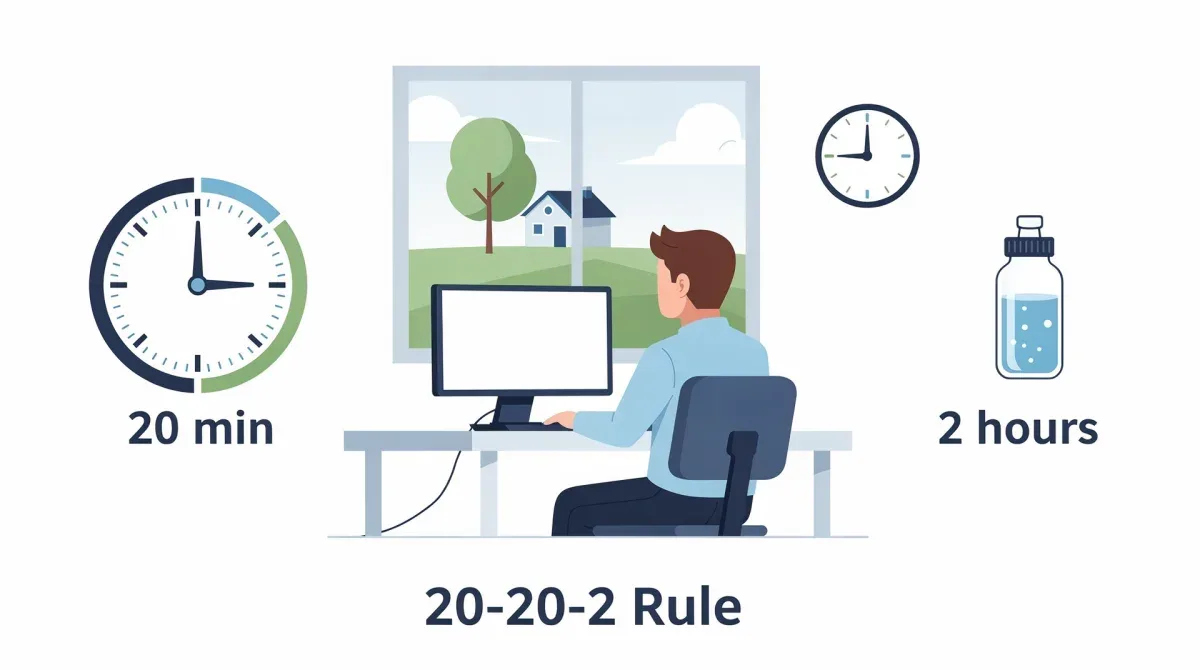
The rule breaks down into three distinct components, each vital for maintaining eye health during prolonged screen use. First, every 20 minutes, you should take a break. This consistent interval ensures that your eyes get regular respite before fatigue fully sets in. Second, during this break, you should look at something 20 feet away. This action allows your eye muscles, particularly the ciliary muscle responsible for focusing, to relax. When you stare at a screen, your ciliary muscles are constantly contracted to maintain focus on a near object. Looking at a distant object allows these muscles to fully relax, preventing accommodation fatigue. Third, and often overlooked, is the '2' in the rule: every 2 hours, drink 2 glasses of water. While seemingly unrelated to eye care, proper hydration is crucial for maintaining the quality and quantity of your tear film, which directly impacts eye comfort and prevents dryness.
Implementing the 20-20-2 rule is straightforward and requires minimal effort, making it highly accessible for anyone who spends significant time in front of screens. You can set a simple timer on your phone or computer to remind you every 20 minutes. When the alarm sounds, consciously shift your gaze away from your screen. Look out a window, across the room, or at any object that is approximately 20 feet away for at least 20 seconds. This short period is sufficient to allow your eye muscles to reset. The hydration aspect can be integrated into your regular daily water intake, ensuring you stay adequately moisturized throughout your workday.
Benefits of consistent application of the 20-20-2 rule
- Reduced eye fatigue: Regular breaks prevent ciliary muscle strain.
- Prevention of dry eyes: Encourages blinking and adequate tear film production.
- Improved focus: Eyes remain fresh and capable of sustained concentration.
- Decreased headaches: Alleviates tension often associated with eye strain.
- Enhanced overall comfort: Contributes to a more pleasant and productive digital experience.
The beauty of the 20-20-2 rule lies in its holistic approach. It addresses not only the visual fatigue but also the physiological need for proper hydration, which is a common underlying cause of dry eyes. By consistently applying this rule, individuals can significantly reduce the incidence and severity of digital eye strain symptoms, potentially by as much as 40%. It's a practical, zero-cost intervention that empowers users to take proactive control of their eye health in the digital age. This rule serves as a fundamental pillar in a comprehensive eye care strategy, complementing other good habits like proper screen ergonomics and adequate lighting.
In summary, the 20-20-2 rule is an indispensable tool in the fight against digital eye strain. Its simplicity, effectiveness, and comprehensive benefits make it a superior and more sustainable strategy than relying solely on external aids. By integrating this rule into daily routines, individuals can experience a noticeable improvement in their eye comfort and overall well-being.
Scientific backing for the 20-20-2 rule and eye health
While the concept of the 20-20-2 rule might seem deceptively simple, it is rooted in sound physiological principles and supported by ophthalmological recommendations. The advice to take regular breaks and shift focus is a long-standing recommendation from eye care professionals, recognized for its ability to mitigate the cumulative stress placed on the visual system during prolonged near work. Understanding the science behind each component of the rule helps solidify its credibility and effectiveness.
The '20 minutes' interval is based on the idea of preventing fatigue before it becomes debilitating. Our eyes, like any other muscle group, experience fatigue when subjected to continuous, repetitive tasks. Sustained focus on a near object, such as a computer screen, keeps the ciliary muscles in a contracted state. Regular short breaks allow these muscles to relax and recover, preventing the onset of accommodative spasm or fatigue. Studies on visual ergonomics and occupational eye health consistently recommend frequent micro-breaks to maintain visual comfort and performance.
The '20 feet away' component directly addresses accommodative strain. When we look at something 20 feet or more away, our ciliary muscles relax to their natural, resting state. This is called optical infinity. By consciously shifting our gaze to a distant object, we give these muscles a crucial opportunity to de-stress. This action helps to prevent pseudomyopia, a temporary blurring of distant vision that can occur after prolonged near work, and reduces the sensation of eye strain and tension headaches. The short 20-second duration is enough to achieve this muscular relaxation without significantly disrupting workflow.
Physiological benefits of the 20-20-2 rule
- Ciliary muscle relaxation: Prevents muscle spasms and fatigue, improving focus flexibility.
- Reduced dry eye symptoms: Conscious breaks encourage blinking, rewetting the eye surface.
- Better blood flow: Movement and breaks can improve circulation to ocular tissues.
- Prevention of refractive shifts: Mitigates temporary changes in vision from prolonged near work.
Finally, the '2 glasses of water every 2 hours' emphasizes systemic hydration, which is vital for tear film health. The tear film, a thin layer of fluid covering the eye's surface, is essential for lubrication, protection, and clear vision. Dehydration can lead to a reduction in tear production and an increase in tear evaporation, exacerbating dry eye symptoms. By ensuring adequate water intake, the 20-20-2 rule indirectly supports a robust and healthy tear film, contributing significantly to overall eye comfort and reducing irritation often mistakenly attributed solely to blue light.
Leading ophthalmic organizations and experts, including the American Academy of Ophthalmology and the American Optometric Association, endorse similar guidelines for digital device users. Their recommendations frequently highlight the importance of breaks, proper viewing distances, and environmental adjustments over singular technological solutions. The scientific community largely agrees that behavioral modifications, such as those promoted by the 20-20-2 rule, offer the most tangible and evidence-based benefits for reducing digital eye strain. This rule is not a fad; it's a scientifically validated practice for eye care in the digital age.
In conclusion, the 20-20-2 rule is more than just a catchy phrase; it's a scientifically sound approach to eye health. Each component is designed to address specific physiological responses to screen use, offering a comprehensive and effective strategy that stands on solid ground within the scientific and medical communities. Its widespread adoption could lead to a significant improvement in public eye health.
Integrating the 20-20-2 rule into your daily routine
Adopting a new habit, especially one that requires consistent breaks during a busy workday, can seem challenging. However, integrating the 20-20-2 rule into your daily routine is simpler than you might think and can yield substantial benefits for your eye health and overall productivity. The key is to make it a seamless part of your workday rather than an interruption.
Start by setting up reminders. Modern smartphones and computer operating systems offer built-in timers or allow for the installation of simple reminder apps. A recurring alarm every 20 minutes can be a gentle nudge to take your eyes off the screen. Many people find it helpful to associate the break with a specific task—for instance, after finishing a short email or completing a paragraph. This turns the break into a natural transition point rather than an arbitrary pause. Ensure your reminder is subtle enough not to be distracting to colleagues if you are in an office environment.
During your 20-second break, identify a suitable distant object. If you work near a window, looking outside is ideal. If not, pick a spot across the room—a picture on the wall, a clock, or even a distant corner. The important thing is to consciously shift your focus to something far away, allowing your eye muscles to relax. Resist the urge to check your phone or another screen during this time; the goal is a complete visual break. You can even combine this with a quick stretch or a deep breath to enhance overall relaxation.
Practical tips for seamless integration
- Use digital timers: Set alarms on your phone or computer for every 20 minutes.
- Identify a fixed distant point: Choose a window or a far wall object for your gaze.
- Combine with other micro-breaks: Stretch, stand up, or take a deep breath during your 20 seconds.
- Hydration reminders: Keep a water bottle handy and set reminders to refill and drink.
- Make it a team habit: Encourage colleagues to adopt the rule for a supportive environment.
For the hydration aspect, keeping a water bottle at your desk is a simple yet effective strategy. Aim to refill it every couple of hours and make sure you're consistently sipping throughout the day. Setting a separate reminder for your two-hour water intake can also be beneficial, helping you track your progress. Consider integrating this with other breaks, like a quick walk to the water cooler, which also provides a physical change of scenery and additional eye relief.
Consistency is paramount. Initially, you might forget some breaks, but with practice, it will become second nature. Encourage family members or colleagues to adopt the rule with you to create a supportive environment. Over time, you'll likely notice a significant reduction in eye strain symptoms, leading to greater comfort and improved productivity throughout your day. The 20-20-2 rule is a small investment of time that yields considerable returns for your long-term eye health.
In conclusion, integrating the 20-20-2 rule into your daily life requires conscious effort but is entirely feasible. By leveraging simple tools and making deliberate choices, you can transform your digital habits into ones that actively protect and preserve your vision. This proactive approach will undoubtedly contribute to a more comfortable and sustainable experience in our screen-centric world.
Beyond the rule: comprehensive eye care tips
While the 20-20-2 rule is an excellent foundation for mitigating digital eye strain, a holistic approach to eye care involves several other practices that can further enhance eye health and comfort. Combining the 20-20-2 rule with these additional tips creates a comprehensive strategy that addresses various aspects of visual well-being in the digital age. These practices range from optimizing your workspace to maintaining general health habits.
Firstly, optimizing your workstation ergonomics is crucial. Position your computer screen about 20-24 inches (50-60 cm) from your eyes, with the top of the screen at or slightly below eye level. This helps maintain a comfortable viewing angle and reduces neck and shoulder strain. Ensure your chair provides good lumbar support, and your feet are flat on the floor. Proper lighting is also vital; avoid glare from windows or overly bright overhead lights. Use indirect or softer lighting to reduce reflections on your screen and ensure the room is adequately lit, but not excessively bright compared to your screen.
Secondly, pay attention to your screen settings. Adjust the brightness of your monitor to match the ambient light in your room. If your screen is too bright or too dim, it can cause eye strain. Increase the text size for easier reading, and adjust the contrast to a level that is comfortable for your eyes. Many devices also offer night mode or warmer color settings, which can be beneficial, especially in the evening, by reducing the amount of blue light emitted and potentially aiding sleep. Regular cleaning of your screen to remove dust and smudges also improves clarity and reduces eye effort.
Additional eye health practices
- Regular eye exams: Essential for detecting and addressing underlying vision problems.
- Proper screen ergonomics: Adjust screen distance, height, and lighting to reduce strain.
- Adjust screen settings: Optimize brightness, contrast, and text size for comfort.
- Maintain a healthy diet: Foods rich in Omega-3, vitamins C and E, and zinc support eye health.
- Wear appropriate eyewear: Ensure your prescription is up-to-date and suitable for screen work.
Thirdly, don't underestimate the importance of overall health and lifestyle choices. A balanced diet rich in antioxidants, Omega-3 fatty acids, and vitamins A, C, and E can support eye health. Regular physical activity improves circulation, benefiting ocular tissues. Getting adequate sleep is also critical, as tired eyes are more susceptible to strain. If you wear corrective lenses, ensure your prescription is up-to-date and that your glasses or contacts are suitable for the specific demands of screen work. Sometimes, a separate pair of glasses for computer use can be beneficial.
Finally, regular comprehensive eye examinations are non-negotiable. An optometrist or ophthalmologist can detect and address underlying vision problems that might be exacerbated by screen use. They can also offer personalized advice based on your specific eye health and work environment. These exams are crucial for early detection of conditions that might not present obvious symptoms but could impact your long-term vision. By combining the 20-20-2 rule with these broader eye care strategies, you can create a robust defense against digital eye strain and promote lasting visual health.
In conclusion, while the 20-20-2 rule is a cornerstone of digital eye strain prevention, a truly comprehensive approach integrates ergonomic adjustments, optimized screen settings, healthy lifestyle choices, and regular professional eye care. By adopting these practices, individuals can ensure their eyes remain healthy and comfortable, even in an increasingly digital world.
Are blue light glasses obsolete? A balanced perspective
The question of whether blue light glasses are obsolete is not a simple yes or no. It requires a nuanced understanding of their purported benefits, the scientific evidence, and the broader context of digital eye health. While initial enthusiasm for these glasses was high, a more balanced perspective suggests that their role is perhaps less central than once believed, especially when compared to proven behavioral strategies like the 20-20-2 rule.
From a purely scientific standpoint, the evidence supporting the widespread use of blue light glasses to prevent digital eye strain or long-term retinal damage is largely inconclusive. Many studies have found no significant difference in eye strain symptoms between users of blue light filtering glasses and those using clear lenses. The amount of blue light emitted by digital screens is often far less than what we are exposed to from natural sunlight, leading experts to question the necessity of filtering it out during the day. While some individuals report subjective relief from glare or improved visual comfort, this often lacks objective, measurable support.
However, it's important not to dismiss them entirely for everyone. For some, particularly those who are highly sensitive to glare or experience discomfort from specific screen types, blue light glasses might offer a marginal benefit in terms of perceived visual comfort. Furthermore, if blue light glasses help an individual feel more comfortable, leading to better focus and reduced anxiety about screen exposure, then they might serve a psychological purpose, even if the physiological benefits are limited. The placebo effect, while not a direct treatment, can still contribute to a sense of well-being.
When blue light glasses might still be considered
- Subjective comfort: Some users report feeling better, even without strong scientific backing.
- Circadian rhythm support: Glasses with significant amber tint may help reduce blue light exposure before bed, aiding sleep.
- Reduced glare: Certain coatings can help with glare, which is a component of eye strain.
- As a complement, not a primary solution: Can be used alongside proven methods like the 20-20-2 rule.
Conversely, the 20-20-2 rule and other comprehensive eye care practices are unequivocally supported by scientific evidence and ophthalmological consensus. These strategies address the root causes of digital eye strain: muscle fatigue, reduced blinking, and environmental factors. They are proactive, behavioral interventions that empower individuals to take direct control of their eye health, rather than relying on a passive filter.
Therefore, rather than being entirely obsolete, blue light glasses are perhaps best viewed as a supplemental tool, not a primary solution. Their effectiveness pales in comparison to fundamental practices such as the 20-20-2 rule, proper ergonomics, and regular eye exams. For those genuinely concerned about their eye health in the digital age, prioritizing these evidence-based, behavioral changes will yield far more significant and sustainable benefits than relying solely on a pair of specialized glasses. The focus should shift from filtering light to managing how we interact with light and screens.
In conclusion, while the debate around blue light glasses continues, current scientific understanding suggests they are not a panacea for digital eye strain and may not be necessary for most people. Their role is best understood as complementary to, rather than a replacement for, proven behavioral strategies like the 20-20-2 rule, which remain the cornerstone of effective digital eye health management.
| Key Strategy | Brief Description |
|---|---|
| 20-20-2 Rule | Every 20 minutes, look 20 feet away for 20 seconds; drink 2 glasses of water every 2 hours. |
| Ergonomics | Proper screen distance, height, and ambient lighting to minimize strain. |
| Screen Settings | Adjust brightness, contrast, and text size for optimal visual comfort. |
| Regular Eye Exams | Essential for detecting and correcting vision problems that contribute to strain. |
Frequently asked questions about digital eye strain
Do blue light glasses completely prevent digital eye strain?▼While some users report subjective comfort, scientific evidence largely suggests blue light glasses do not completely prevent digital eye strain. The condition is multifaceted, primarily caused by reduced blinking, muscle fatigue, and poor ergonomics, rather than solely blue light exposure.
How does the 20-20-2 rule reduce eye strain by 40%?▼The 20-20-2 rule effectively reduces strain by promoting regular breaks (20 minutes), relaxing eye muscles by focusing on distant objects (20 feet), and ensuring proper hydration (2 glasses of water every 2 hours). This comprehensive approach addresses key causes of fatigue and dryness, leading to significant relief.
Is blue light from screens harmful to my eyes?▼The amount of blue light emitted by digital screens is generally much lower than natural sunlight. While excessive exposure, especially at night, can disrupt sleep patterns, direct harm to the eyes from screen-emitted blue light is still debated and not definitively proven by current research.
What are the main symptoms of digital eye strain?▼Common symptoms include dry eyes, blurred vision, headaches, eye fatigue, irritation, and neck or shoulder pain. These symptoms often worsen with prolonged screen use and can impact comfort and productivity. The 20-20-2 rule helps alleviate these issues.
Can children benefit from the 20-20-2 rule?▼Absolutely. Children are increasingly exposed to digital screens, making them susceptible to eye strain. Implementing the 20-20-2 rule from a young age can help establish healthy screen habits, protect their developing vision, and prevent discomfort associated with prolonged device use.
Conclusion
The evolving discussion around digital eye health reveals that while blue light glasses have captured public attention, their role in preventing digital eye strain is largely overshadowed by more fundamental, evidence-based practices. Strategies like the 20-20-2 rule offer a scientifically sound and highly effective approach to reducing eye fatigue and discomfort by addressing the core behavioral and physiological factors. By integrating this simple yet powerful rule, alongside proper ergonomics and regular eye care, individuals can proactively safeguard their vision in an increasingly digital world, moving beyond debates on specific eyewear to embrace comprehensive well-being.
